What is the resource?
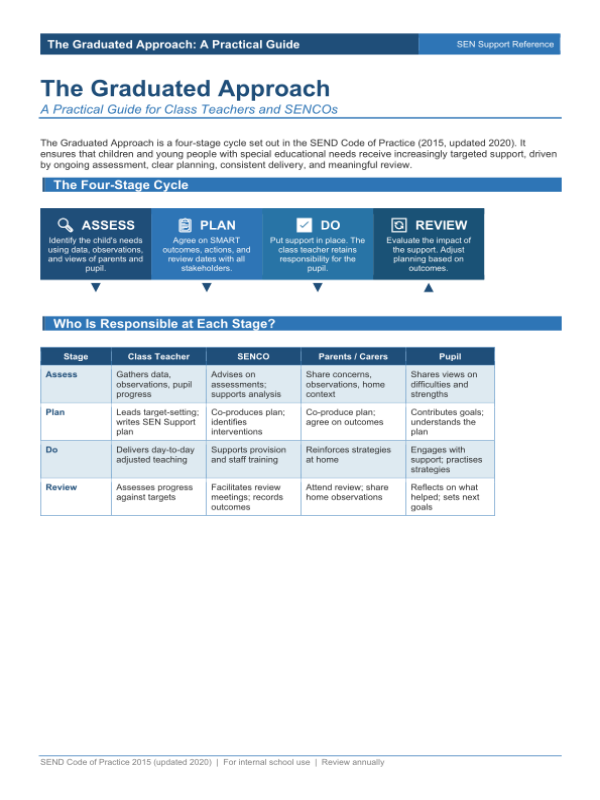
The graduated approach is the framework set out in the SEND Code of Practice 2015 that describes how schools and settings should identify, plan, deliver, and review support for children and young people with special educational needs. It is built around a continuous four-stage cycle — assess, plan, do, and review — which is intended to be revisited regularly and refined over time as understanding of a child's needs deepens and their response to support becomes clearer. Rather than being a single event or a fixed pathway, the graduated approach is a dynamic, ongoing process of learning and adjustment. At the assess stage, the school gathers a detailed picture of the child's strengths, difficulties, and barriers to learning, drawing on teacher observation, assessment data, parental knowledge, and the child's own views. The plan stage uses this information to agree on targeted support, set clear outcomes, and identify the strategies and resources that will be put in place. The do stage is where the planned support is implemented, with the class teacher retaining responsibility for the child's progress even where additional adults are involved. Finally, the review stage evaluates the impact of the support against the agreed outcomes, considers whether targets have been met, and informs the next cycle of planning. A graduated approach guide helps schools understand not only what this cycle looks like in practice, but how to apply it with rigour and consistency. It addresses common pitfalls such as vague target-setting, insufficient involvement of parents and pupils, and the over-reliance on teaching assistant support without clear pedagogical intent. When implemented well, the graduated approach ensures that SEN support is purposeful, evidence-informed, and genuinely responsive to the needs of the individual.
Who is it for?
This resource is for SENCOs, class teachers, school leaders, and governors with responsibility for SEND provision. It is particularly valuable for staff who are new to SEN support or working in settings where documentation and planning processes need strengthening. Local authority SEN advisers and school improvement partners supporting settings with their SEND practice will also find it a useful reference.
How it should be used
Use this guide to audit and strengthen your setting's current approach to SEN support, ensuring that the assess, plan, do, and review cycle is being applied consistently and with sufficient rigour across all year groups. Share it with class teachers and teaching assistants to build shared understanding of their roles within the graduated approach. Use it alongside your SEN Support Plan template to ensure that documentation reflects each stage of the cycle, and return to it when preparing for SEND reviews, OFSTED inspections, or local authority monitoring visits.